
Your Creative Team Doesn't Need More Talent. It Needs Fewer Psychopaths.
- Kirk Hensler
- May 29
- 5 min read
Here's how you get 'em.




There’s a very romanticized version of creative production that people seem deeply attached to. Moodboards. Espresso. “Vision.” Someone in a beanie saying “What if we made it feel more honest?” while standing in front of a $14,000 lighting setup.
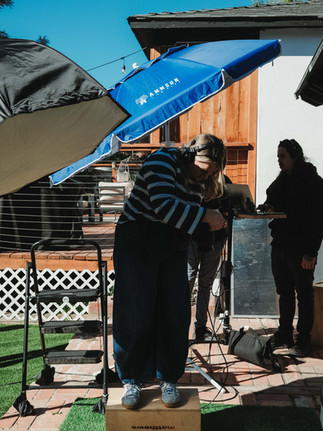
The actual job is 14 people standing in a parking lot at 7:12am trying to figure out why the prop avocado suddenly looks aggressive on camera while a client asks if we can “just squeeze in” another 11 deliverables before lunch.
Creative production is not really an art form. (It’s a logistics company wearing vintage sunglasses.)
Which is why building a good team has almost nothing to do with finding the “best creatives.” In fact, some of the most talented creatives are completely unusable in a team environment. Incredible eye. Horrific vibes. The human equivalent of a Ferrari with no steering wheel.
What you actually need are highly competent people who:
can function under pressure
know how to collaborate
don’t melt emotionally after 11 hours on set
understand hierarchy
can solve problems without announcing themselves like a contestant on The Apprentice
This is all a shockingly rare combination.
The San Diego Problem
Running productions in San Diego is a weird balancing act because the city has a reputation for being relaxed, friendly, and generally less insane than LA or New York. Which is great for quality of life, less great when giant national clients arrive expecting everyone to operate like they’re storming Normandy for a yogurt campaign.
There’s a certain production culture in bigger markets that treats intensity as professionalism. Everyone’s moving fast. Everyone’s stressed. Someone is always “circling back.” Nobody has consumed water voluntarily in three business days. Meanwhile, San Diego crews tend to be more collaborative and human, which honestly works better most of the time.
The trick is finding the middle ground: high-level execution without staffing your set entirely with cortisol addicts.
Hiring Creatives is Mostly Just Advanced Vetting
People always ask where to find good creative talent and the answer is referrals. Exclusively referrals.
Cold applications are basically creative roulette. Every portfolio says “passionate storyteller.” Every website has cinematic slow motion footage of coffee being poured. Nobody’s resume says: “Can emotionally regulate after a client changes the brief six times.”
The best hires usually come from trusted people already inside your orbit. You ask your producer who they loved working with recently. You ask your DP who actually showed up prepared. You ask your stylist who didn’t create unnecessary chaos over a wrinkled napkin.
That’s how good crews get built.
A Set Visit is Not Your TED Talk
One of the fastest ways to identify whether someone belongs in production is bringing them onto a live set. And for anyone entering that environment for the first time, here’s a free piece of advice: You are there to observe.
Not optimize. Not consult. Not workshop improvements in real time. Nobody wants the intern who arrives halfway through a 30-shot production day and starts saying things like: “I would’ve approached this differently.”
Please don’t.
You don’t know the client relationship, the timing constraints, the approvals, the budget, the chaos happening off camera, or the twelve disasters that were already solved before call time.
Production sets are ecosystems. Quietly absorb information first before trying to become Steve Jobs with a tote bag.
Restaurant Experience is Weirdly Relevant
The people who thrive in production usually have one or more of the following:
restaurant experience
sports background
unnerving calm under stress
mild childhood trauma
an ability to carry six things at once without complaining
Restaurant people especially tend to do well because production is basically hospitality with more cables. Everything is urgent. Everyone’s hungry. Somebody important is unhappy. Timing matters. The environment is controlled chaos. And if you can survive a brunch rush, you can probably survive a commercial shoot.
Moodboards are Easy. Execution is the Job.
Anyone can make something look beautiful conceptually now. Pinterest exists. Figma exists. Every 22-year-old creative director has a deck with minimalist typography and the word “elevated” in it seventeen times.
Now explain how you’re getting from idea to execution.
What’s your intake process? What happens between pre-pro and shoot day? How do you organize assets? What systems do you use? What happens when the client suddenly wants 30 deliverables instead of 12? Production is not about taste alone, the actual value is operational competence under pressure.


The Biggest Red Flag in Hiring
The biggest red flag is when someone only talks about themselves. “I did this.” “My vision.” “My process.” “My work.”
Creative production is collaborative by necessity. If someone has no instinct toward team language, they usually struggle the second things stop revolving around them personally.
The strongest people on set tend to understand how to integrate into a larger machine because they understand reality.
No commercial gets made by one genius floating dramatically through a warehouse. It gets made by 20 exhausted specialists communicating efficiently while eating granola bars over a folding table.
Burnout is the Industry Default
Most agency and production environments operate on a deeply scientific staffing model known as: “How close to collapse can we get everyone before turnover becomes inconvenient?”
People get loaded to 100% capacity until they mentally evaporate and then leadership acts shocked when morale drops. A better system is actually paying attention to bandwidth before someone starts visibly dissociating during shot lists. Which sounds obvious, but apparently remains revolutionary management theory in creative industries.
Good teams aren’t built by maximizing output every second of every day. They’re built by understanding who can handle pressure, who needs support, who thrives in intensity, and who should never be allowed near a client-facing Zoom call after 4pm.
The Best Sets Almost Feel Telepathic
Once crews work together long enough, people stop needing full explanations. Your grip disappears for two minutes and comes back with exactly the modifier you needed before you even asked for it. Your producer already solved the scheduling issue before you finished noticing it. Your stylist quietly adjusts something microscopic that suddenly makes the entire frame work better.
Nobody’s announcing it. Nobody’s making it theatrical. Not “genius.” Not ego. Not chaos disguised as artistry.
Just highly skilled people trusting each other enough to execute quickly and calmly under pressure. Which honestly feels rarer than talent at this point.
The Reality Nobody Posts About
Commercial production looks glamorous online because nobody uploads the parts where their knees stop functioning after hour twelve.
But the reality is this work is physically exhausting, mentally demanding, and deeply collaborative. And if you’re lucky, eventually you build a team where everyone pushes hard without making the environment miserable.
A team where standards are high but the people are still human, excellence exists without constant emotional warfare, and everyone wants the work to be better, faster, sharper — but can still look around at the end of the day and acknowledge: “Yeah. That actually went really well.”
Which, in production terms, is basically inner peace.



Comments